

Quick answer: Aftermarket off-road lights are worth adding when your factory headlights leave a useful part of the trail in darkness. For tight turns and campsite access, start with compact ditch or side-facing pods. For open trails, use bumper-mounted driving lights that add forward distance and shoulder coverage. The right first upgrade depends on where your current beam disappears and how you travel after dark.
Modern factory LED headlights can be excellent on paved roads, yet overlanding creates different visibility problems. A road headlight follows the direction of the vehicle and controls upward light to protect other drivers. On a dark trail, that can leave the inside of a turn, a ditch, a campsite entrance, or the ground beside the vehicle difficult to see.
Where Do Your Factory Lights Fall Short?
| Driving Situation | Missing Visibility | First Upgrade | Suitable LOYO Option |
|---|---|---|---|
| Tight forest trails and sharp turns | Trail edges, ditches and obstacles outside the headlight beam | Compact ditch lights aimed slightly outward | LOYO 3-inch Honeycomb LED Pods |
| Open desert and long dark trails | Hazards farther ahead and across the shoulders | Bumper-mounted driving lights | LOYO 110W Dual-Light Driving Lights or the DIY LED Light Bar |
| Dust, rain or changing visibility | Nearby terrain and road edges | Low-mounted auxiliary lighting with controlled coverage | LOYO 90W White/Amber Work Light |
| Slow rock crawling | Tires, rocks and the ground beside the vehicle | Side-facing pods or rock lights | LOYO 4-inch 6-in-1 DIY Lens Pods or LOYO 360 degree rock lights |
| Rural routes with animals near the road | Movement along the shoulders | Outward-aimed auxiliary pods | LOYO 4-inch Wind Tunnel LED Pods |
Which Off-Road Light Should You Upgrade First?
best Ditch Lights for Turns, Trail Edges and Campsite Access

Ditch lights make sense when the center of the trail is already visible but the sides disappear. Mounted near the hood or bumper corners and aimed outward, they help reveal a turn before the vehicle finishes steering into it. That same side coverage is useful when looking for a campsite entrance, watching for animals or maneuvering around trees.
The LOYO 3-inch Honeycomb LED Pods suit this role because their compact size fits locations where a large light would obstruct the driver’s view or dominate the vehicle. Each pod uses a 60W white work light with an amber marker or turn-signal function. The IP67 housing resists water and dust, while the die-cast aluminum body and breather valve help control heat and internal pressure changes during outdoor use.
Aim ditch lights far enough outward to cover the missing area without reflecting strongly from the hood or mirrors. The final angle should match the vehicle height and the speed at which you normally travel.
best Driving Lights for Open Trails and Longer Viewing Distance
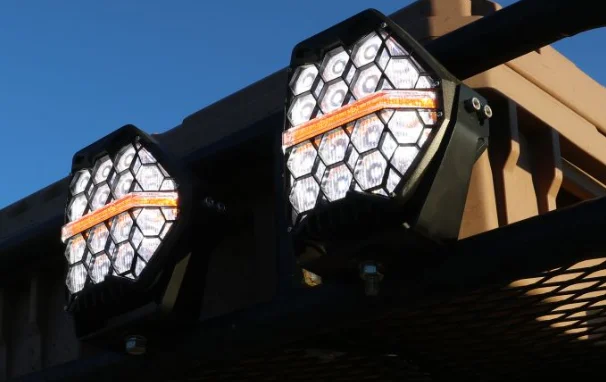
Open desert routes, rural tracks and faster trail sections create a different problem. Drivers need more time to recognize a washout, animal, branch or change in direction. A bumper-mounted driving light can extend the useful forward view while keeping the lamp below the hood line.
The LOYO 7 in 120W Honeycomb LED Driving Light Kit combines a strong 120W light output with wide illumination. Its wide coverage helps show both the route ahead and the shoulders, making it suitable for mixed terrain where a narrow forward-only beam may leave dark areas near the vehicle. The Rigid Aluminum Housing is designed for exposed mounting, while the supplied wiring harness and protective cover make the installation and off-road use easier to manage.
For a detailed comparison of mounting height and beam direction, see our bumper-mounted lighting guide.
If you regularly drive open desert or remote trails after dark, a forward light bar becomes easier to justify. The LOYO DIY Modular LED Light Bar can start with a shorter pod layout and expand later, so the system can grow with the vehicle instead of forcing the owner to install a full-width bar from the beginning.

LOYO DIY Light bar Comes in modular sections — from 3 up to 10 pods — so you can run it short and clean on your bumper, or go full-length for max coverage. each pods with 45 watts allows you to adjust brightness by adding and removing.
best Side, Rock and Rear Lights for Slow Work

Forward brightness is less important when crawling over rocks, reversing beside a trailer or repairing the vehicle at camp. These jobs benefit from broad light close to the vehicle. LOYO Rock lights show the ground around the tires, while side and rear work lights illuminate equipment, recovery points and the area behind the bumper.
These lights should have their own switch so they can be used only where needed. For camping, also consider how long the lights may run with the engine off and whether the battery system can support the load.
What Makes an Off-Road Light Worth Paying For?
Useful coverage comes first. A large advertised lumen number cannot tell you whether the light reaches the trail edge, stays concentrated downrange or creates glare from the hood. Review beam photos when available and choose the optic for the mounting position and terrain.
Housing design matters because off-road lights repeatedly heat up, cool down and encounter water, dust and vibration. Look for a sealed housing, a durable lens, effective heat dissipation and a method of balancing internal pressure. A breather valve can help reduce moisture risk when temperature changes cause air inside the lamp to expand and contract.
White and amber functions add flexibility when they serve a clear purpose. White is the normal choice for forward trail illumination. Amber side or marker lighting can add vehicle definition and provide another option in dusty or visually busy conditions. Beam placement remains more important than color alone.
The wiring should match the electrical load and include suitable fusing, relays, connectors and switches. Poor wiring can cause voltage drop, unreliable operation or radio interference even when the lamp itself is well built. Check what is included before ordering and confirm whether the vehicle needs model-specific brackets or an auxiliary switch interface.
Finally, compare warranty and support. LOYO off-road lighting products are backed by a 12-month warranty, with product-specific terms confirmed in the quotation. For wholesale and private-label orders, samples allow the beam, lighting functions, housing and wiring to be checked before a larger purchase.
Installation, Aiming and Road Use
Mount lights where they can perform without sending reflected light back toward the windshield. Bumper locations work well for forward driving lights. Hood or A-pillar positions suit outward-facing ditch lights, but the beam should avoid the hood and mirrors. Side, rock and rear lights should point toward the immediate work area.
Use a fused circuit and a relay or control system rated for the combined load. Secure cables away from exhaust components, sharp edges, suspension travel and steering parts. After the first trail drive, check the brackets, connectors and aim again because vibration can reveal movement that was not obvious during installation.
Off-road-only lights should remain off on public roads unless the exact lamp, function, installation and operation comply with the applicable requirements. In the United States, FMVSS No. 108 covers required and replacement vehicle lighting, while state rules can also regulate auxiliary lamp position, use and covers. A certification logo on a website does not establish compliance for every product or installation.
A Practical First Overlanding Lighting Setup
For tight wooded routes, start with one pair of compact pods aimed toward the trail edges. For open routes, place a pair of driving lights on the bumper to add distance and width. Drivers who regularly arrive at camp after dark can add a separate rear or side work light for reversing, unloading and recovery.
This staged approach keeps the wiring organized and makes every light responsible for a visible area. Once the first pair has been used in real conditions, it becomes much easier to decide whether the next improvement should add distance, side coverage or close-range work light.
Explore LOYO off-road lights for trucks, Jeeps, SUVs, ATVs, UTVs and overland projects. For a product recommendation, send the vehicle, mounting location, typical terrain, required beam direction and target quantity so the light and wiring can be matched to the application.
Related: What Off-Road Lighting Setup Actually Works Best on Night Trails?