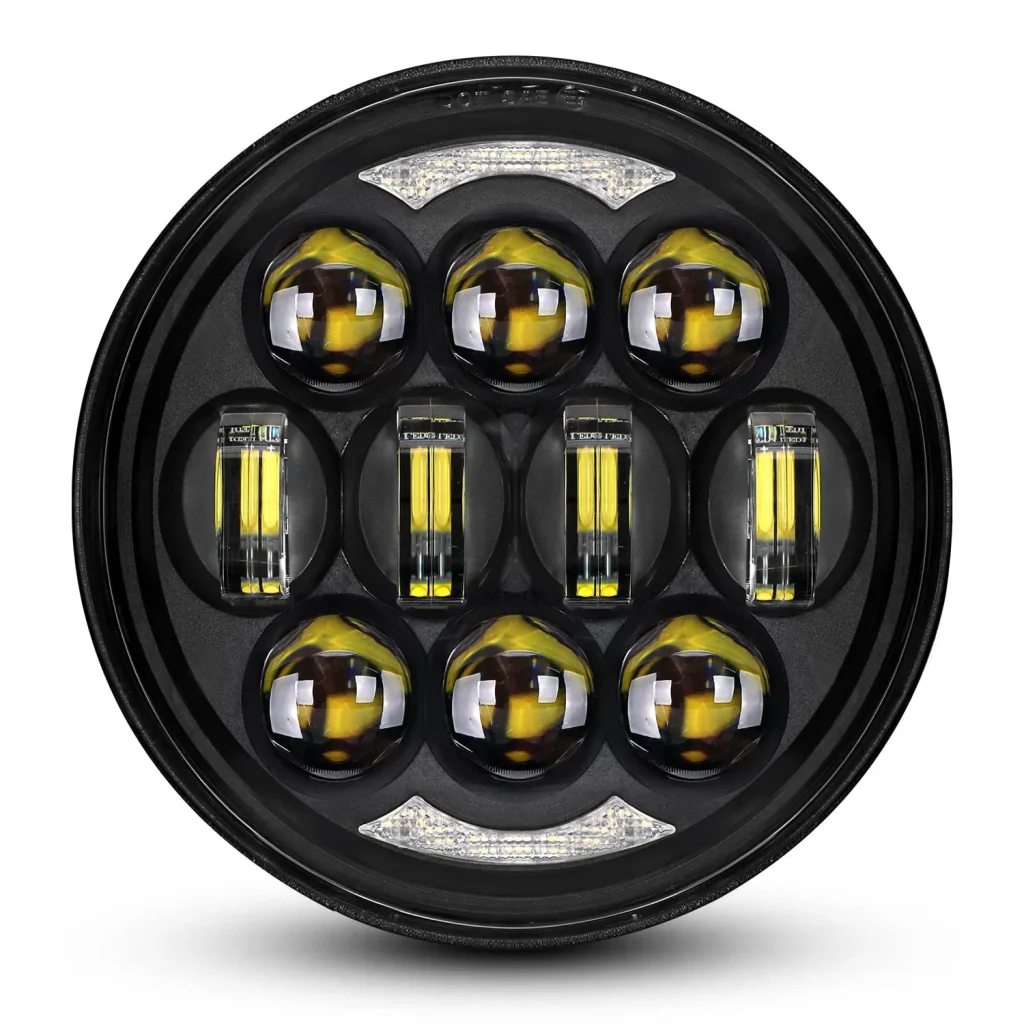
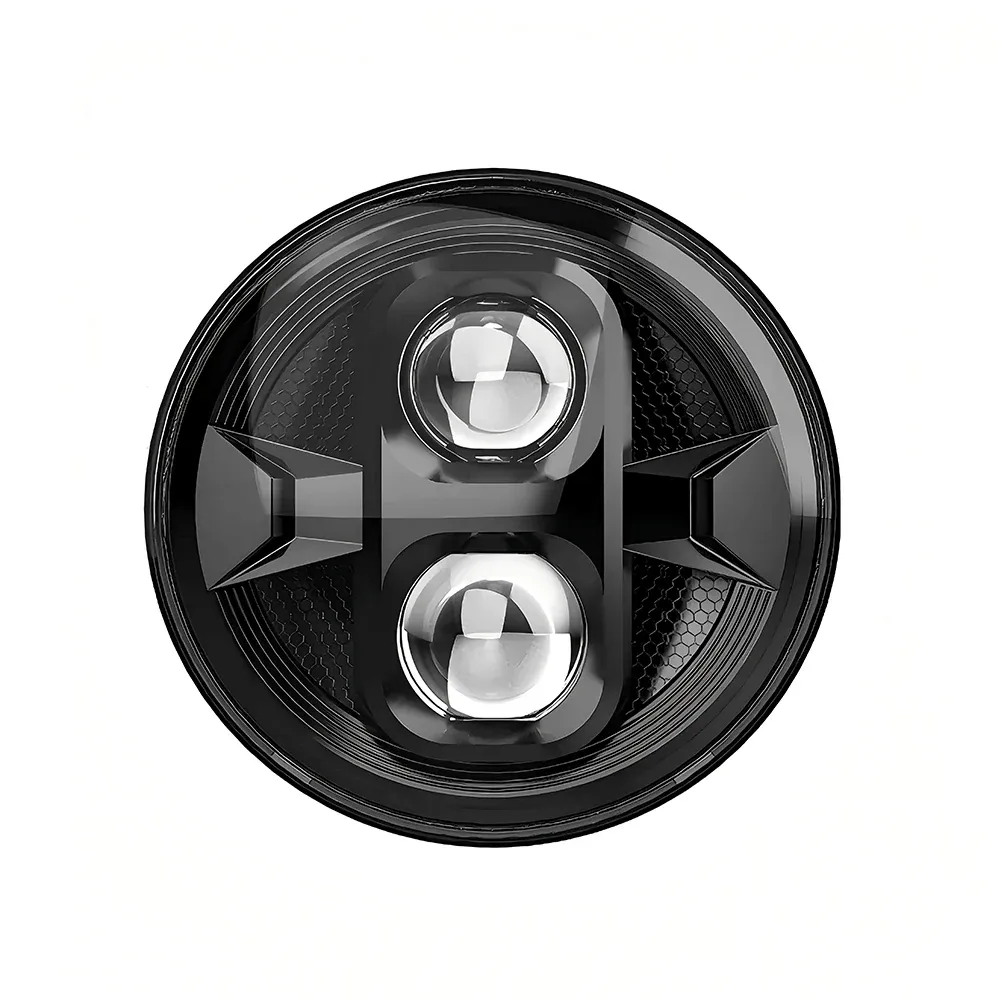
If you’ve ever seen headlights labeled “DOT approved,” you might assume that means they’re automatically safe and legal. The reality is more nuanced. Not all headlights that claim DOT compliance truly meet legal standards, and not all LED headlights are street legal, even if they look bright and high-quality.
LOYO is a motorcycle LED lighting manufacturer with years of experience in DOT-compliant LED headlight development for Harley-Davidson, BMW, ADV, and dirt bikes. In this guide, we’ll break down what DOT really means, how to identify DOT vs Non-DOT Motorcycle Headlights, and how to avoid common mistakes that could cost you safety, money, or even a ticket.
- What “DOT” Actually Means for Motorcycle Headlights
- Do Headlights Need to Be DOT Approved?
- How to tell if headlights are DOT approved?
- How to Spot Fake DOT Headlights Knock-Off
- Why Some LED Motorcycle Headlights Are Not DOT Approved
- DOT vs ECE Motorcycle Headlights
- Are 6000K LED Motorcycle Headlights Legal?
- Will You Get Pulled Over for LED Motorcycle Headlights?
- FAQ
- Summary
What “DOT” Actually Means for Motorcycle Headlights

“DOT” stands for the U.S. Department of Transportation. When a motorcycle headlight is labeled as DOT-compliant, it means the product is designed to meet federal safety standards defined under FMVSS (Federal Motor Vehicle Safety Standards).
These standards regulate critical aspects such as:
- Beam pattern and light distribution
- Brightness and glare control
- Color output (white for headlights, amber/red for signals)
- Mounting position and alignment
- Durability under vibration and weather conditions
A DOT-compliant headlight is engineered not just to be bright, but to provide controlled visibility without blinding other drivers.
Do Headlights Need to Be DOT Approved?

For street use in the United States, the answer is simple:
Yes, your primary headlights must comply with DOT SAE standards.
If your headlights do not meet these standards, you may face:
- Traffic violations or fines
- Failed vehicle inspections
- Liability issues in case of an accident
However, non-DOT lights are still widely used in specific situations such as:
- Off-road driving
- Racing or track use
- Show vehicles or custom builds
The key is understanding where and how each type should be used.
How to tell if headlights are DOT approved?

This is one of the most important questions—and also one of the most misunderstood.
To verify whether a headlight is truly DOT-compliant, you need to check multiple factors:
1. Lens Markings
Authentic DOT-approved headlights will have permanent markings on the lens, such as:
- “DOT”
- “SAE” codes
These markings should be etched or molded into the lens, not printed or applied as stickers.
2. SAE Codes
SAE codes indicate the function and compliance type of the light. For example:
- SAE HR – Halogen replaceable
- SAE D – Discharge (HID/LED systems)
A lack of SAE coding is often a red flag.
3. Beam Pattern Performance
Even if a light has markings, the real test is performance:
- Does it produce a sharp cutoff?
- Is the light focused or scattered?
- Does it reduce glare for oncoming traffic?
True DOT headlights are engineered with precise optics, not just higher brightness.
Note: A “DOT” label alone does not guarantee compliance. Many low-cost products replicate the marking without meeting actual standards.
How to Spot Fake DOT Headlights Knock-Off
The market is flooded with products that claim compliance but fail basic testing.
Here are the most common warning signs:
- Sticker instead of engraving
Real DOT markings are part of the lens, not added afterward - Missing SAE codes
A compliant light should include proper classification codes - Overly bright but unfocused beam
Excessive glare is a sign of poor optical design - Unrealistic lumen claims
Extremely high numbers without testing data often indicate marketing exaggeration
From a manufacturing perspective, true compliance requires:
- Optical engineering
- Beam pattern validation
- Thermal management testing
- Long-term durability checks
If a product skips these steps, it’s unlikely to be truly compliant.
Why Some LED Motorcycle Headlights Are Not DOT Approved
A common myth is that LED headlights are not legal.
In reality:
LED technology is legal
Poor design is not
Many LED motorcycle headlights fail DOT standards because:
- The beam pattern is not properly controlled
- The light output creates glare
- The housing design is incompatible with LED chips
- No certification testing is performed
High-quality LED headlights can absolutely meet DOT requirements when properly engineered.
DOT vs ECE Motorcycle Headlights
DOT and ECE are both safety standards, but they are not identical.
- DOT (U.S.) focuses on durability and standardized output
- ECE (Europe) tends to require sharper beam cutoff and stricter glare control
Neither is “better” universally. They are built around different regulatory priorities.
High-end lighting products often meet both standards.
From a manufacturing perspective, LOYO works with both DOT and E-mark requirements when developing motorcycle lighting systems, ensuring the beam design and optical performance align with different regional road regulations rather than focusing on a single certification label.
Are 6000K LED Motorcycle Headlights Legal?
6000K LED motorcycle headlights are generally considered legal in the U.S. as long as they produce a neutral white light and meet DOT requirements for road use.
In practical terms, legality is not determined by the number alone (6000K), but by how the light behaves on the road.
When 6000K headlights are typically legal:
- The light appears clean white (not blue or purple tint)
- The headlight assembly is DOT-compliant as a system
- The beam pattern has a defined cutoff and controlled spread
- The headlights are properly aimed and adjusted
Related article: How to Know If Your Motorcycle Headlight Is way too bright
When 6000K headlights can become illegal or problematic:
Even if the color temperature is within range, issues arise when:
- LED bulbs are installed into halogen reflector housings
- Light scatters upward or into oncoming traffic
- The output creates noticeable glare for other drivers
- The beam pattern lacks a proper cutoff
In these cases, the issue is not the 6000K rating itself, but optical mismatch between bulb and housing design.
Will You Get Pulled Over for LED Motorcycle Headlights?
It depends less on LED technology and more on behavior.
Enforcement usually happens when:
- Beam is visibly distracting to other drivers
- Headlight color is not white
- Lighting setup appears non-standard for road use
In most cases, properly aimed, DOT-compliant LED headlights are not an issue.
FAQ
What does DOT mean for motorcycle headlights?
It refers to U.S. safety standards regulating beam pattern, color, and road use compliance.
How to tell if motorcycle headlights are legal?
Check DOT/SAE markings, beam pattern behavior, and manufacturer documentation.
Which LED motorcycle headlights are DOT approved?
Only models tested and certified to FMVSS standards with proper markings.
Is DOT or ECE better?
Neither is universally better; they reflect different regional safety priorities.
Summary
The difference between DOT and non-DOT motorcycle headlights is not just legal terminology.
It shows up in how the light behaves on the road:
- One is designed around controlled visibility
- The other is often designed around appearance or output
For street riding, control matters more than brightness.
Related article:
Best Motorcycle Headlight in 2026: How to Choose the Right One
How to Choose the Best Motorcycle Auxiliary Lights